
WA Falls Rule Switches to Regulation 79 for High Risk Construction — Inspectors Want a Genuine Effort Now, With an Education Window to 31 March 2027. Recast Your SWMS.
From Thursday 1 October 2026, regulation 79 of Western Australia’s Work Health and Safety (General) Regulations 2022 applies to high risk construction work, ending the transitional arrangement that kept the old OSH regulation 3.55 in force. WorkSafe WA’s statement of regulatory intent, valid to 31 March 2027, says inspectors may educate and/or enforce, and will expect a genuine effort and controls equivalent to or better than the old rules. Recast SWMS, site checks and subbie briefings around the regulation 79 hierarchy this month.
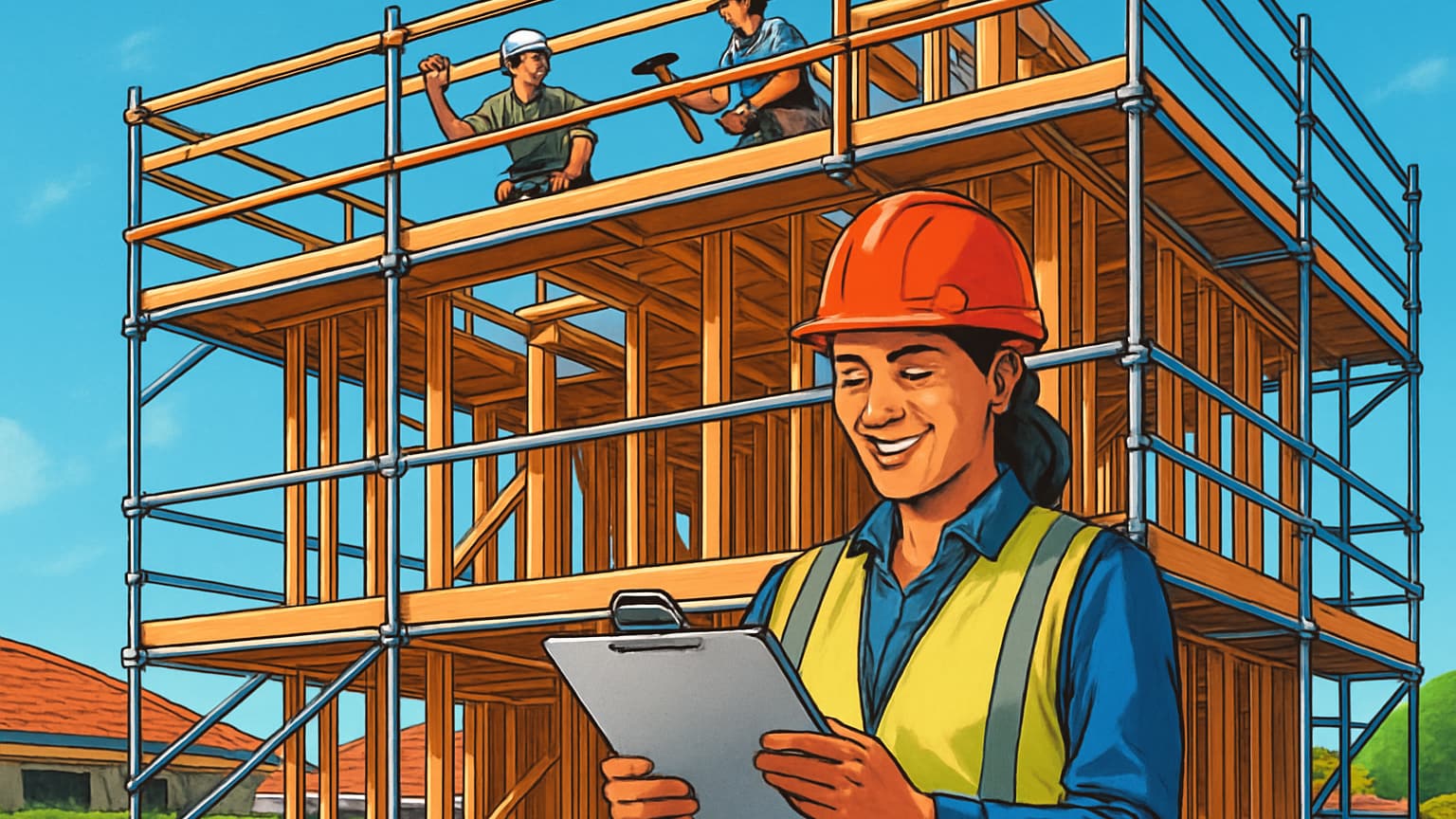
WA's falls transition is over — regulation 79 now applies
Since Thursday 1 October 2026, regulation 79 of Western Australia's Work Health and Safety (General) Regulations 2022 applies to high risk construction work. The transitional arrangement that kept the old Occupational Safety and Health Regulations 1996 falls rule (regulation 3.55) alive on construction sites ended on 30 September 2026, as listed on WorkSafe WA's transitional arrangements page (updated 18 September 2026).
HIA flagged the change to members on 1 October 2026, saying it introduces new expectations for builders, contractors and workers doing tasks where there is a risk of falling.
This article summarises WorkSafe WA's published material. It is not legal or safety advice; check the regulations, the codes of practice and your own WHS adviser for your sites.
What regulation 79 actually requires
WorkSafe WA's Statement of regulatory intent (published 16 September 2026) sets out the rule. If it is not reasonably practicable to eliminate the risk of a fall under regulation 78, the person conducting a business or undertaking (PCBU) must minimise it by providing and maintaining a safe system of work, in this order:
| Step | What the PCBU must provide | | --- | --- | | 1 | A fall prevention device, if reasonably practicable | | 2 | If not, a work positioning system | | 3 | If neither is reasonably practicable, a fall arrest system, so far as reasonably practicable |
The regulations define a work positioning system as plant or a structure (other than a temporary work platform) that lets a person be positioned and safely supported for the duration of the work. A fall arrest system is plant or material designed to arrest a fall, such as an industrial safety net, catch platform or safety harness system, other than one relying entirely on a restraint technique.
WorkSafe's falls guidance page (updated 17 September 2026) makes two points builders should note. First, regulation 79 does not prescribe a height. Second, the old OSH regulation 3.55 applied its controls where there was a risk of a fall of two metres or more from the edge of specific structures such as scaffolds, or three metres or more from any other edge. Those trigger heights do not carry over to regulation 79.



How inspectors will approach it until 31 March 2027
The statement of regulatory intent is valid from 1 October 2026 to 31 March 2027. WorkSafe says inspectors will use its compliance and enforcement policy, which may mean information and education and/or enforcement action where the requirements have not been met.
The key line for builders: given how long the transition ran, inspectors will expect to see that a genuine effort has been made to manage the risk of falls from height, and that controls are equivalent to or better than those required under the old OSH Regulations. The six months is not an amnesty.
WorkSafe also points out that a combination of controls can be used where one is not enough, such as training on top of physical controls, and that information, training and instruction must be suitable for the work, the risks and the controls in place (regulation 39).
The code of practice now carries more weight
WorkSafe directs duty holders to the revised Managing the risk of falls in housing construction: Code of practice, prepared with the Construction Industry Safety Advisory Committee to clarify which controls can be used, plus an information sheet on managing the risk of falls from roofs in housing construction.
Codes of practice are admissible in court. A court may treat the code as evidence of what is known about a hazard and what is reasonably practicable to control it. If your site method departs from the code, you need a documented reason.
Practical moves for this week
1. Retire old templates. Pull any WA safe work method statements (SWMS), quotes or scopes still written to OSH regulation 3.55. Rebuild them around the regulation 78 and 79 order: eliminate the fall risk where reasonably practicable, then fall prevention, then work positioning, then fall arrest. Don't rely on the old two-metre and three-metre triggers.
2. Walk every live roof and upper-floor stage. Check edge protection, scaffold, covers over openings and access on jobs now in frame, roof and fit-out. Note where you are relying on harnesses and record why a higher-order control was not reasonably practicable.
3. Brief your subbies in writing. Roofers, plumbers, solar installers and carpenters all work at height. Make sure their methods match yours, and toolbox the change with crews, which also covers the regulation 39 training duty.
4. Re-price the jobs that need more gear. If moving from harness-only to scaffold or edge protection adds hire costs or time, put it in new quotes now. Don't absorb it silently on fixed-price work.
5. Keep the evidence. WorkSafe has said it will monitor through inspection outcomes. Dated photos, updated SWMS and toolbox records are how you show a genuine effort.
Bottom line for the desk
In WA, regulation 79 has applied to high risk construction work since 1 October 2026. Inspectors have until 31 March 2027 to lean on education, but they expect controls at least as good as the old rules and a genuine effort to follow the hierarchy. Update your SWMS, check your sites and keep the records this month.